


 Open Access
Editor-in-Chief

Prof. Scholz Miklas
University of Johannesburg, South Africa
eISSN
3029-2670
Publication Frequency
Quarterly (since 2025)
Indexing
CAS
Google Scholar
· Scilit Database (Switzerland)
J-Gate
All the publications will be archived by the PKP Preservation Network for long-term electronic preservation.
Authors are encouraged to self-archive the final version of their published articles into institutional repositories (such as those listed in the Directory of Open Access Repositories).
Authors are also encouraged to use the final PDF version published on the website of Academic Publishing.
About the Publisher
Academic Publishing insists on taking academic exchange and publication as the main line, carrying out comprehensive management based on science and technology, and fully exploring excellent international publishing resources. Within 5 years, it will form a strategic framework and scale with science (S), technology (T), medicine (M), education (E), and humanities and arts (H) as the main publishing fields. Academic Publishing is headquartered in Singapore and based in Malaysia, with the United States and China providing the main scientific and academic resources. At the same time, it has established long-term good cooperative relations with other publishing companies, scientific research communities, and academic organizations in more than a dozen countries and regions. Academic Publishing uses English and Chinese as its main publishing languages, mainly publishing books, journals, and conference papers in print and online. The vast majority of publications follow the international open access policy, providing stable and long-term quality and professional publications. With the joint efforts of the expert team and our professional editorial team, our publications will gradually be indexed by international databases in stages to provide convenient and professional retrieval for various scholars. At the same time, manuscripts we accept will be subject to the peer review principle, and cutting-edge and innovative research articles will be preferentially accepted for peer reference and discussion. All kinds of our publications are welcome for peer to contribute, access, and download.
Volume Arrangement
Featured Articles
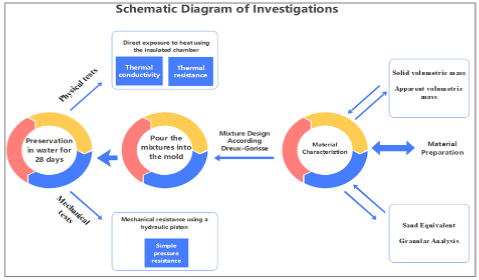
Effect of natural pozzolana, pozzolanic sand, and basalt on thermal and mechanical properties of green concrete
Green concrete, also known as sustainable concrete, is a building material that aims to reduce environmental impact by using natural, recycled, or sustainable materials in its production. One way to achieve sustainability in concrete is to replace cement with pozzolanic materials, which not only reduces the carbon footprint but also improves the performance of concrete and reduces its cost. This study aims to use natural materials that can partially or completely replace cement and conventional aggregates in concrete mixes. pozzolanic gravel (GPoz) replaced coarse aggregate, basaltic sand (SBas) and pozzolanic (SPoz) replaced fine aggregate, while ground pozzolana (PN) replaced cement. This work focuses on the experimentation and simulation of concrete mixes using the four abovementioned materials. 36 cubes were cast to conduct the thermal conductivity test by direct exposure of concrete samples, where an insulated thermal chamber was designed from thermal bricks, equipped with a heat source from the bottom and an empty space for the tested sample from the top, and then the resistance test on simple pressure was conducted for the cubic samples at the age of 28 days. Pozzolanic aggregate, when used in combination with basalt sand, showed greater thermal resistance compared to conventional concrete. Even with the replacement of 50% of the cement with ground pozzolana, we notice an increase in resistance of more than 11%, but with the replacement of basalt sand with pozzolana sand, we notice an increase in thermal resistance of more than 53%. As for the mechanical properties represented by resistance on simple pressure, we notice an acceptable decrease in resistance when replacing cement with pozzolana, with the exception of mixtures containing aggregates and pozzolana sand together, where replacing 50% of the cement with pozzolana increases the resistance on simple pressure by more than 46.4%.
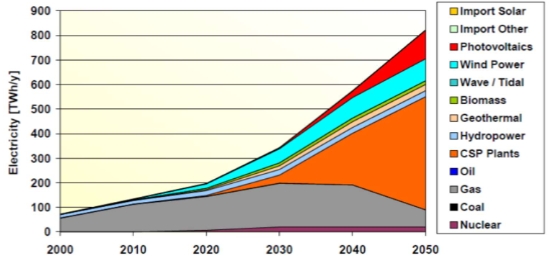
Energy plays a very important role in Egypt’s economic development, but the country has a gap between its produced energy and the demand of its growing population. Utilization of solar power systems in Egypt could help the country to close this gap and fulfil its national and international obligations. However, since 1980, the focus in Egypt has been on large-scale industrial solar projects. Limited attention is given to smaller systems for typical residential buildings. The aim of this research, therefore, is to highlight the potential of small residential solar systems (SRSS) in Egypt. With the huge number of residential buildings accommodating more than 115 million Egyptians, SRSS could be the unearthed gem of a sustainable source of energy in Egypt. The geographical location of Egypt and climate were used to generate solar data using the Global Solar Atlas application. The amounts of monthly and annual solar irradiations were calculated and analysed to decide the best orientation of the system (facing east, west, north, and south), identify the optimum tilt angle of the system, and determine the size of the solar panels. A case study was used to illustrate the procedures of designing SRSS for a typical residential building in Egypt. The results showed that a 26 kWp SRSS oriented facing the east with an optimum tilt angle between 15° and 30° could produce an annual total output of electricity more than the annual demand of the occupants of the studied residential building. Such a system would fit easily on the roof of the building. It was concluded that the installation of SRSS in Egypt could help the country meet the demand of its ever-increasing population if properly regulated, financed, and managed. It is recommended that Egypt develop and implement policies to make installations of SRSS an attractive choice among homeowners and investors by introducing encouraging incentives and creating a competitive market with affordable SRSS.
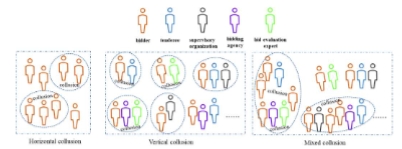
Policy measures are crucial for regulating collusive bidding and are integral to effective governance. However, current research lacks a comparative exploration of strategies to combat collusive bidding through policy. Therefore, this study aims to identify more effective countermeasures by examining policy variations between regions with low and high incidences of collusive bidding. Using Latent Dirichlet Allocation (LDA) topic modeling, the study extracts key themes from these policies, while qualitative analysis highlights differences in approaches. It underscores that integrating electronic and information technology into bidding systems significantly reduces collusive practices. While increasing penalties can deter collusive bidding, achieving desired impacts requires thorough investigation and vigilant oversight. Additionally, strengthening external supervision enhances control over such activities. This study identifies critical governance strategies for addressing collusive bidding and advocates further research into more effective methods within the construction sector.
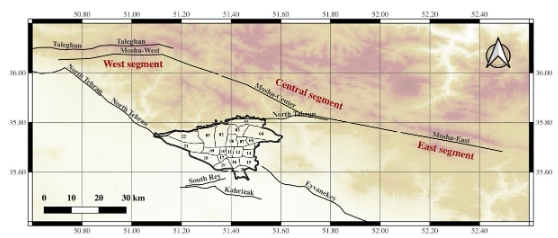
This paper presents the results of a study caried out to assess probable seismic loss, in term of damage to the residential buildings and the number of fatalities, in the case of Mosha Fault seismic scenario in Tehran, Iran. Accordingly, seismic risk components (including seismic hazard, exposure model and fragility curves) are evaluated. The stochastic finite-fault method with dynamic corner frequency is applied for quantifying ground motion values. The results shows that PGA on the soil surface could range between 0.1 g to 0.45 g. Then, a reliable model of building exposure by analyzing census data from Tehran is compiled. This model included 19 different classes of buildings and is used to evaluate the potential damage to buildings from seismic scenario. The results indicate that the median of damage ratio from 100,000 iterations for the whole of the city is about 6% ± 1.54%. The study found that the central and eastern parts of Tehran are the most vulnerable areas, with an estimated 15,952 residents at risk of losing their lives in this scenario. This is equivalent to 0.2 percent of total population of Tehran. The finding from this study can be used by local authorities to provide appropriate emergency-response and preparedness plans in the case of Mosha Fault seismic scenario.
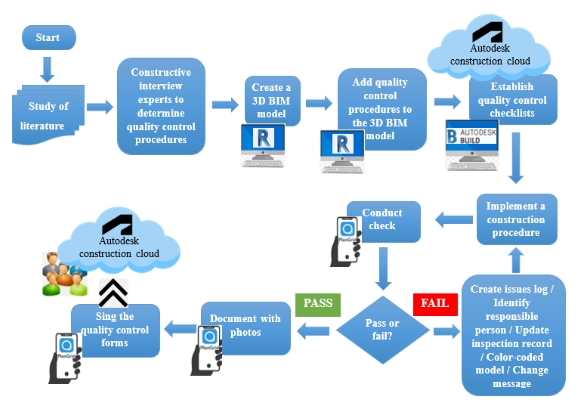
The quality of construction projects significantly impacts social and economic development. However, low quality and project failure often result from factors such as lack of quality procedures, poor communication, task coordination, and inefficient progress monitoring. This research aims to improve the efficiency of the construction phase by creating quality control checklists for processes and enhancing quality management through a collaborative digital environment integrating building information modeling (BIM) and cloud computing. Expert constructive interviews were first conducted to define a construction process quality control procedure to be linked to the 3DBIM model and then transition to a collaborative cloud environment (Autodesk Construction Cloud). An actual instance in Latakia City (Syria) demonstrated that the proposed methodology improves the efficiency and effectiveness of quality management during the implementation phase. It does so by offering a robust database, enhancing on-site quality information extraction from BIM models using smartphones, documenting defects and entering inspection data directly into a shared digital environment, and making it easier to track corrective actions and feedback. This facilitates constant and organized access to current data, reducing errors and rework, saving money and time, and enhancing decision-making speed and effectiveness. The search recommends the necessity of strict laws to adhere to quality procedures and the importance of providing infrastructure for digital transformation in quality management.
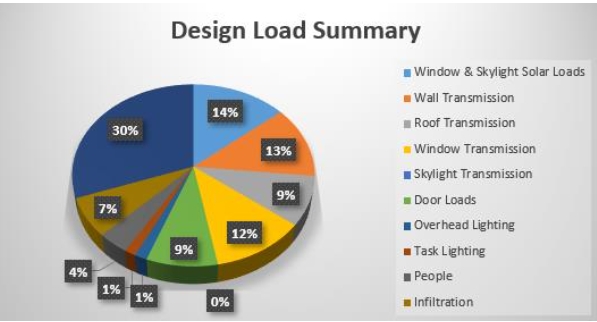
The building sector is the predominant consumer of primary energy globally. The building sector accounts for around 40% of global energy production.Net Zero Energy Buildings (NZEBs) are highly suggested by energy experts as an effective option to alleviate the strain on primary energy sources caused by the building sector. The disparity between energy performance predictions provided during the design phase and the actual energy performance of residential buildings is mostly attributed to a limited comprehension of the components that influence energy consumption and the constraints of whole building simulation software. The objective of this research was to perform a comparison analysis of the expected and actual energy consumption of a prototype net-zero energy house built at the University of Technology and Applied Sciences in Muscat. The Hourly Analysis Programme (HAP V4.2) was utilised to forecast the energy consumption of a Net Zero Energy Building (NZEB) at HCT, taking into account the availability of an Energy Recovery Ventilator (ERV) and the absence of an ERV. The newly built house underwent a one-month testing phase to fulfil many duties according to competition regulations. One of the main goals was to generate on-site energy through photovoltaic panels, producing an amount proportional to the energy consumed by the house. Upon comparing the actual energy consumption data with the simulated result, it was noticed that the actual energy demand of the house was around 20% lower than the prediction made by the simulation tool.
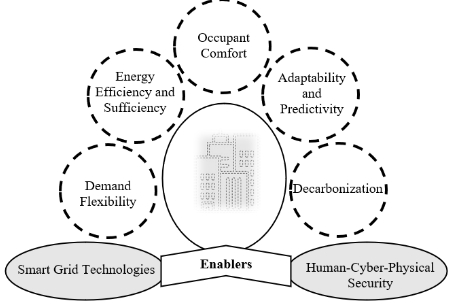
Today, grid-interactive efficient buildings are gaining popularity due to their potential sustainability performances through their ability to learn, adapt, and evolve at different scales to improve the quality of life of their users while optimizing resource usage and service availability. This is realized through various practices such as management and control measures enabled by smart grid technologies, interoperability, and human-cyber-physical security. However, despite their great potential, the research of those technologies still faces various challenges. These include a lack of communication and control infrastructure to address interpretability, security, cost barriers, and difficulties balancing occupant needs with grid benefits. Initially, system modelling and simulation are promising approaches to address those challenges ahead of time. It involves the consideration of complex systems made up of components from various research domains. This paper addresses the above practices, highlighting the value of integrating technology and intelligence in the planning and operation of buildings, both new and old. It provides a way to educate architects and engineers about this emerging field and demonstrates how these practices can help in creating efficient, resilient, and secure buildings that contribute to occupant comfort and decarbonization.