


 Open Access
Editor-in-Chief

Xi'an Jiaotong University, China
eISSN
3029-2778
Publication Frequency
Quarterly
Indexing
Scopus
CAS
J-Gate
All the publications will be archived by the PKP Preservation Network for long-term electronic preservation.
Authors are encouraged to self-archive the final version of their published articles into institutional repositories (such as those listed in the Directory of Open Access Repositories).
Authors are also encouraged to use the final PDF version published on the website of Academic Publishing.
About the Publisher
Academic Publishing insists on taking academic exchange and publication as the main line, carrying out comprehensive management based on science and technology, and fully exploring excellent international publishing resources. Within 5 years, it will form a strategic framework and scale with science (S), technology (T), medicine (M), education (E), and humanities and arts (H) as the main publishing fields. Academic Publishing is headquartered in Singapore and based in Malaysia, with the United States and China providing the main scientific and academic resources. At the same time, it has established long-term good cooperative relations with other publishing companies, scientific research communities, and academic organizations in more than a dozen countries and regions. Academic Publishing uses English and Chinese as its main publishing languages, mainly publishing books, journals, and conference papers in print and online. The vast majority of publications follow the international open access policy, providing stable and long-term quality and professional publications. With the joint efforts of the expert team and our professional editorial team, our publications will gradually be indexed by international databases in stages to provide convenient and professional retrieval for various scholars. At the same time, manuscripts we accept will be subject to the peer review principle, and cutting-edge and innovative research articles will be preferentially accepted for peer reference and discussion. All kinds of our publications are welcome for peer to contribute, access, and download.
Volume Arrangement
2025
2023
Featured Articles
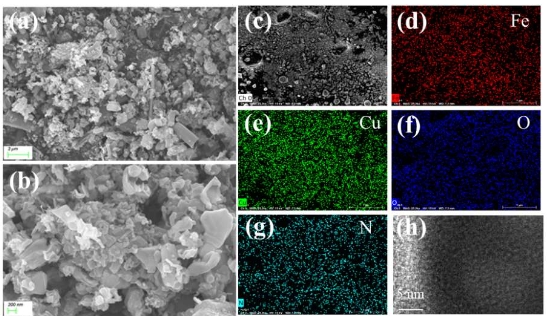
The reduction of carbon dioxide to valuable chemical products is a promising solution to address carbon balance and energy issues. Herein, amorphous nitrided copper-iron oxides are prepared by gas-phase nitriding of Cu Fe-layered double hydroxide precursor s with urea as nitrogen source. Amorphous materials are more likely to generate defect vacancies during the reaction process, and these vacancies can function as active sites for catalytic reactions. Therefore, the obtained materials show high activity for CO 2 electroreduction to methane and formic acid, achieving a total Faraday efficiency of 74.7% at −0.7 V vs RHE and exhibiting a continuous 10 h durability in the H-cell. The uniformly distributed Cu + sites act as active sites by losing electrons to activate CO 2 . During the CO 2 electroreduction , CO 2 is converted to *COOH via proton-electron coupling, *COOH combines directly with a proton in solution to produce the HCOOH product, and the other part of *COOH undergoes a protonated dehydration process to form the *CHO intermediate which dehydrates again to form CH 4 . This study provides a new approach for designing CO 2 electroreduction catalysts.
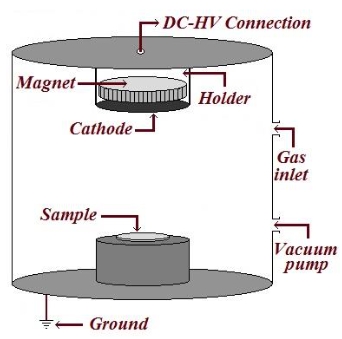
Aluminum zinc oxide (AZO) is a nontoxic and a low-cost material that finds application as a transparent conducting electrode in photovoltaic devices. In this study the (direct current) DC magnetron sputtering of AZO films is carried out at different deposition times of 5, 10, 15, 20 and 25 min’s at room temperature and it’s structural, optical, electrical and morphological properties are studied for its use as a front contact for thin film solar cell application. The structural study suggests that the preferred orientation of grains along (002) plane having hexagonal structure and the optical and the electrical studies suggest that the films show an average transmission of 70% and a resistivity of the order of 10 -4 Ωcm. On the other hand, the scanning electron microscopy (SEM) images suggest the formation of packed grains having a homogeneous surface. Moreover in order to study the optoelectronic properties of prepared samples, the electronic and optical calculations of the AZO are performed by the first-principles calculations using density functional theory (DFT).
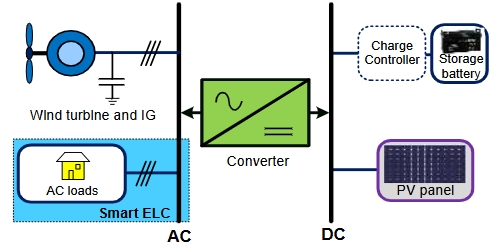
This study provides a technical and financial analysis for the incorporation of a microgrid structure with a wind energy conversion system for producing electricity. This study’s primary aim is to provide solutions for issues that arise when isolated induction generators are employed with microgrids. A closed-loop smart electronic load controller is used to regulate the loads in the system that are supplied by the generation. A switched variable capacitor bank is used to supply reactive power initially during a voltage dip at varying winds and loads to sustain the voltage profile. Additionally, a simple voltage control loop-based controller for the generator side converter maintains the voltage at a steady level. Using HOMER software, an economic study of the suggested wind-based microgrid structure is also presented. A laboratory experimental setup is used to support the MATLAB/Simulink study of the proposed method and its control. The findings back the feasibility of implementing the suggested plan in grid-isolated regions for supplying critical loads.
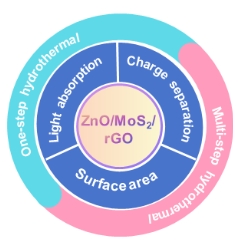
Energy shortage and environmental pollution have become one of the important global issues, and semiconductor photocatalytic technology is considered as one of the effective means to solve these problems. As a new and efficient green material, ZnO has attracted wide attention. ZnO is widely used in the field of photocatalysis due to its non-toxicity, low cost, environmental friendliness, adjustable band gap, high electron density, and chemical stability. However, the recombination of photogenerated charge carriers in ZnO hinders its practical application and lowers the utilization efficiency of visible light. On the other hand, molybdenum disulfide/reduced graphene oxide (MoS2 /rGO), as a binary non-precious metal co-catalyst, has a larger specific surface area, suitable band gap width, and visible light response capability compared to single-phase graphene co-catalyst. Therefore, introducing MoS2 /rGO co-catalyst into the ZnO system can provide more active sites, reduce the probability of photogenerated charge carrier recombination, and improve the utilization efficiency of visible light. In this review, we summarize the hydrothermal synthesis methods for preparing this highly demanded nanocomposite material, including one-step and stepwise methods. Subsequently, we elaborate on the mechanism of enhancing light absorption and achieving efficient electron-hole separation behavior in the ternary system heterojunction structure during the photocatalytic process. Due to its significant advantages, this ternary system heterojunction structure has been widely applied in the field of photocatalysis, including applications such as pollutant degradation, sterilization, and water splitting.
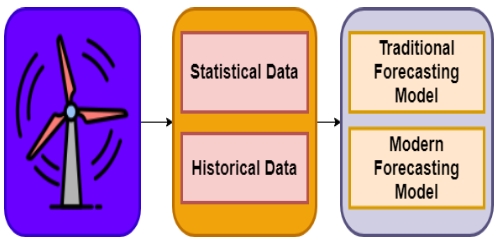
This study addresses the critical role of wind power forecasting in ensuring stable and reliable power system operations. Wind Power Forecasting is critical for the efficient operation of plant, time scheduling, and it’s balancing of power generation with grid integration systems. Due to its dependency on dynamic climatic conditions and associated factors, accurate wind power forecasting is challenging. The research delves into various aspects, including input data, input selection techniques, data pre-processing, and forecasting methods, with the aim of motivating researchers to design highly efficient online/offline models on weather-based data. The overarching goal is to enhance the reliability and stability of power systems while optimizing energy resource utilization. The analysis reveals that hybrid models offer more accurate results, highlighting their significance in the current era. This study investigates different Wind Power Forecasting (WPF) models from existing literature, focusing on input variables, time horizons, climatic conditions, pre-processing techniques, and sample sizes that affect model accuracy. It covers statistical models like ARMA and ARIMA, along with AI techniques including Deep Learning (DL), Machine Learning (ML), and neural networks, to estimate wind power.
fmos