

Living room arch engineering design: Structural, aesthetic, and construction analysis
Abstract
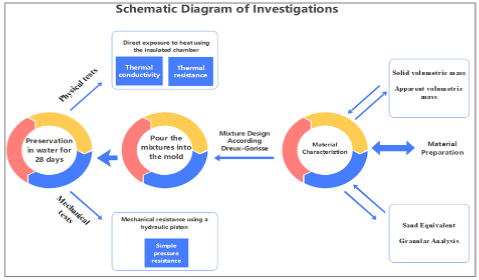
This study investigated the structural performance and durability of a living room arch design (more-than-half-cycle design) by evaluating its material properties, mechanical properties, safety, and load-bearing behavior. The materials used for the arch construction, including reinforced concrete and wood composites, were tested for density, tensile strength, and compressive strength. Mechanical tests assessed load distribution, deflection under various loads, and resilience. Safety analysis included stability checks under different loading conditions, including static, dynamic, and lateral forces. To simulate long-term performance, the arch underwent accelerated aging tests to evaluate material fatigue and deformation over time. The results showed that the selected materials exhibited high compressive strength and durability, ensuring adequate safety margins under all tested conditions. However, slight deflections were observed under peak loading scenarios. Overall, the arch demonstrated excellent stability, uniform load distribution, and minimal material degradation over time. These findings highlight the robustness of the design and its potential application in modern living spaces.
Copyright (c) 2025 Author(s)

This work is licensed under a Creative Commons Attribution 4.0 International License.
References
[1]Smith J, Brown A, Davis C. Optimizing Material Efficiency in Arch Design. Journal of Structural Engineering. 2022.
[2]Zhang L, Lee M. CAD Applications in Modern Arch Design. International Journal of Engineering Design. 2023.
[3]Lee K, Choi P, Wu M. Aesthetic Considerations in Architectural Arches. Architectural Review; 2021.
[4]Nguyen H, Liu T. Material Choices for Contemporary Arches. Building Design Journal. 2022.
[5]Patel S. Arches in Open-Plan Living Spaces. Interior Design Perspectives; 2022.
[6]Rojas D, Figueroa M, Castillo F. Innovations in materials for arch construction. Journal of Construction and Engineering. 2022.
[7]Williams J, Taylor R. Structural Materials for Modern Architecture, 1st ed. New York, NY, USA: Springer; 2023.
[8]Zhang J, Liu Q. Applications of 3D printing in architectural arches. Journal of Digital Construction. 2021.
[9]Harris C, Simmons T. Smart materials in contemporary arch design. Architectural Innovation Review; 2024.
[10]King D, Edwards R. The Role of Prefabrication in Arch Construction. Construction Technology Review; 2023.
[11]Miller J, Zhang B. Advancements in 3D Printing for Architectural Elements. Construction Innovation Journal. 2024.
[12]Wong F, Lee L. Stress Analysis and Simulation in Arch Design. Engineering Computational Review; 2023.
[13]Smith J. Proportional Design in Modern Architecture. Transactions on Architecture; 2023.
[14]Kumar R, Lee S. Innovative Materials for Interior Structures. Int. Conf. on Material Science; 2022.
[15]Chen H. Structural Analysis Techniques for Residential Spaces. Transactions on Civil Engineering; 2023.
[16]Patel M. Aesthetic Considerations in Contemporary Interior Design. Design Journal. 2023.
[17]Zhao L. Functional Design Elements in Residential Architecture. Proc. Conf. on Built Environment Design. 2023.
[18]Hibbeler A. Structural Analysis, 10th ed. Upper Saddle River, NJ, USA: Pearson; 2020.
[19]Hibbeler RC. Mechanics of Materials, 9th ed. Upper Saddle River, NJ, USA: Pearson; 2014.
[20]American Concrete Institute. Building Code Requirements for Structural Concrete (ACI 318-19). ACI; 2019.
[21]Salvadori M, Heller R. Structure in Architecture, 3rd ed. Englewood Cliffs, NJ, USA: Prentice Hall; 1996.
[22]Chopra AK. Dynamics of Structures: Theory and Applications to Earthquake Engineering, 5th ed. Upper Saddle River, NJ, USA: Pearson; 2020.