


 Open Access
Editor-in-Chief

Oasi Research Institute-IRCCS, Italy
eISSN
3029-276X
Publication Frequency
Semi-annual
Indexing
Polish Scientific Bibliography
All the publications will be archived by the PKP Preservation Network for long-term electronic preservation.
Authors are encouraged to self-archive the final version of their published articles into institutional repositories (such as those listed in the Directory of Open Access Repositories).
Authors are also encouraged to use the final PDF version published on the website of Academic Publishing.
Google Scholar
J-Gate
Open Access Library
About the Publisher
Academic Publishing insists on taking academic exchange and publication as the main line, carrying out comprehensive management based on science and technology, and fully exploring excellent international publishing resources. Within 5 years, it will form a strategic framework and scale with science (S), technology (T), medicine (M), education (E), and humanities and arts (H) as the main publishing fields. Academic Publishing is headquartered in Singapore and based in Malaysia, with the United States and China providing the main scientific and academic resources. At the same time, it has established long-term good cooperative relations with other publishing companies, scientific research communities, and academic organizations in more than a dozen countries and regions. Academic Publishing uses English and Chinese as its main publishing languages, mainly publishing books, journals, and conference papers in print and online. The vast majority of publications follow the international open access policy, providing stable and long-term quality and professional publications. With the joint efforts of the expert team and our professional editorial team, our publications will gradually be indexed by international databases in stages to provide convenient and professional retrieval for various scholars. At the same time, manuscripts we accept will be subject to the peer review principle, and cutting-edge and innovative research articles will be preferentially accepted for peer reference and discussion. All kinds of our publications are welcome for peer to contribute, access, and download.
Volume Arrangement
2023
2022
Featured Articles

A comprehensive review (1963–2024) of environmental psychology: Trends, themes, and future directions
Multidisciplinary environmental psychology studies the dynamic link between humans and their natural and manmade settings. This thorough study synthesises 443 works from 1963 to 2024 on topics such as physical surroundings’ effects on behaviour, environmental stressors, pro-environmental behaviour, and applying psychological theories to environmental interactions. This literature is synthesised to identify patterns, themes, and future directions. Growing environmental concerns and the need for sustainable development have changed the profession. Green areas have been demonstrated to boost mental health and reduce stress. Nature helps mental exhaustion recuperation. Hospitals and workplaces’ design and structure affect health and productivity. Walkable, green urban development improves citizens’ well-being and promotes sustainable living. Environmental stresses including noise, pollution, and overpopulation harm mental and physical health. Children exposed to noise pollution are more likely to develop cardiovascular illness and cognitive deficits. Anxiety and despair caused by climate change are also becoming more apparent. Pro-environmental behaviour is emphasised, with notions like planned behaviour and community-based social marketing working. Behaviour interventions using social norms and feedback have decreased energy and waste. Personal values-driven intrinsic motivation promotes long-term behavioural change better than extrinsic incentive. Environmental psychology uses surveys, experiments, and mixed-methods research. Virtual and augmented reality provide for environmental simulations and psychological studies. Good health and well-being, excellent education, sustainable cities, responsible consumerism, climate action, and living on land are among the field’s major contributions to the UNSDGs. Environmental psychology will help establish sustainable and healthy settings that correspond with the UNSDGs as environmental issues grow.
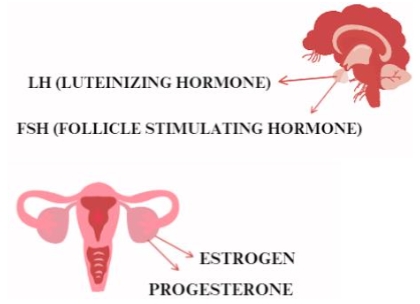
The menstrual cycle has attracted the interest of many researchers for many years. It is analyzed from many angles, including its impact on mental health. Hormonal changes over the course of the cycle have a very strong impact on the emotions, needs, or pain experienced. Estrogen, secreted shortly before ovulation, influences increased confidence and feelings of attractiveness, which can lead to new relationships. In contrast, progesterone, secreted during the luteal phase, promotes the strengthening of stable relationships, and a large proportion of women may experience premenstrual syndrome (PMS) during this time. This publication discusses studies from recent years that have assessed the variability of women’s needs and emerging symptoms during different phases of the cycle. It also summarizes any strategies and practical tips needed to work with women considering their cyclical variability.
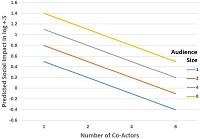
This experiment examined the influences of number of co-actors and audience size on manual dexterity task performance and subjective reactions such as perceived effort and arousal. Predictions derived from social impact theory and the self-attention perspective’s other-total ratio indicated that both number of co-actors and audience size should influence responses. Undergraduate students (N = 128) responded as 1, 2, 4, or 8 group members who were observed in counterbalanced fashion by 1, 2, 4, or 8 audience members for four performance trials. The predictions of increased task performance with larger audience sizes and decreased performance as number of co-actors increased were not supported. Participants’ rated arousal was somewhat consistent with the predictions from the self-attention perspective and social impact theory. Self-reported effort was consistent with the predicted patterns, but not always significantly so. The influence of number of others is moderated by the objective-subjective nature of responses of real co-actors performing in front of live audiences.
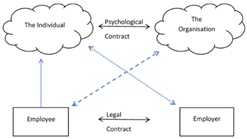
The level of research undertaken on the academic psychological contract, and its influence on academics’ behaviour is limited. This paper seeks to consider the academic psychological contract, by reviewing its manifestation within the role and the influence on their undertaking of the role. Particularly important is academics’ interpretation of the role and what they consider important. Within this, the paper considers in-role and extra-role activities and what may be the grey areas in which time is spent. The research adopts the combined usage of phenomenology with interpretivist processes to investigate the insights of eighteen academics at nine UK University Business Schools. Semi-structured interviews were used to collect data to consider the constructs’ manifestation. Key aspects of behaviour were identified as discretionary effort autonomy and managerialism, with links to academic citizenship.