Intensification of the work of elementary school teachers over the years has influenced teachers’ health, mainly mental health outcomes. The aim of the present study was to analyze the predictors of common mental disorders among Brazilian elementary school teachers. The sample involved 530 elementary school teachers from 63 schools in Londrina, Paraná, Brazil. Common mental disorders were assessed through a self-report questionnaire. The independent variables were related to work, lifestyle, and health disorders. Poisson regression was used to estimate prevalence ratios. The prevalence of common mental disorders in the overall sample was 31.6%. In the multivariate analysis, the work predictors associated with higher common mental disorder prevalence were inadequate infrastructure of schools, experience of violence, and low job support. With regard to health characteristics, teachers with musculoskeletal symptoms, problems related to dust, emotional exhaustion, low professional achievements, and one or more chronic diseases presented a higher prevalence of common mental disorders. The magnitude of associations varied from PR = 1.27 to 2.52. The high prevalence of common mental disorders suggests a public health problem among these professionals. Educational systems should provide adequate work conditions and monitor health-related characteristics to prevent common mental disorders among Brazilian elementary school teachers.
Background: Acne, a chronic inflammatory disease, results from multi-nodal effects, including inflammatory reactions among others. The consequences of acne extend beyond the physiological and aesthetic appearance, with reported adverse effects on mental health. Objective: This study analyzed the impact of acne on mental health determinants among Mauritian adults. Methods: A cross-sectional quantitative survey was carried out among Mauritian adults (n = 381) suffering from acne. The tool assessed quality of life through an adapted Acne-Specific Quality of Life scale, self-esteem and appearance anxiety using the Rosenberg self-esteem scale, and appearance anxiety inventory respectively. Results: (i) Acne and demographics: The data revealed that a sizeable proportion of Mauritians (86.4%) suffer from facial acne with varying severity as per the self-reported mild (50.1%), moderate (42.8%), and severe acne (7.1%) across the sampled participants. (ii) Acne and quality of life: Acne severity was associated with age group and education levels (p < 0.05) as opposed to the indifference across gender. An inverse correlation was found between acne severity and quality of life, and the majority of the sample (59.9%) suffered from body dysmorphic disorder as a result of anxiety related to the acne. (iii) Acne and mental health constructs: Participants having severe acne experienced very low self-esteem (mean score = 6), confirming the relationship between acne and self-esteem [χ2(34) = 126.105, p < 0.05, Cramer’s V = 0.426]. Acne severity had a significant effect on appearance anxiety (H = 16.05, p < 0.001), adversely impacting mental health. Mauritians generally sought dermatological assistance for their acne (54.1%); however, a significantly larger population (78.5%) felt that treatment should not be siloed through a dermatologist. 70% of the sample also preferred psychological support, which would enhance their quality of life. Conclusion: The quality of life of Mauritian adults is negatively affected by acne, and the severity of psychological impairment is multi-fold, from poor self-esteem to anxiety, leading to isolating behaviors. Preemptive processes such as psychological conditioning and support are necessary to decrease the burden associated with acne.
by Ayodeji Adekunle Eluyemi, Amos Adebimpe Amosun, Peter Adetokunbo, Tunji Omoseyin, Ogundele K. T., Oluwabusayo Oluwakemi Eluyemi, Samuel Adedigba Adeojo
We investigated the perception of residents in southwestern Nigeria towards the establishment of a contested infrastructure, namely nuclear power plants (NPPs) and deep geological nuclear waste repositories. The study used an online survey methodology, encompassing 78 participants with a predominantly male composition (62%) and high educational attainment: postgraduate degrees (60%), graduate degrees (20%), undergraduate studies (18%), and secondary school certificates (2%). The research centered on “trust” as the primary independent variable, exploring its associations with factors, including fear, safety perceptions, and both local and foreign expertise. Statistical analysis using Pearson’s correlation revealed robust positive relationships between trust in safety measures and NPP management (r = 0.72), as well as between trust and local expertise (r = 0.60). Significantly, fear regarding NPPs exhibited a strong negative correlation with support for their construction (r = −0.70), while trust in foreign expertise showed minimal correlations with other variables (r ≤ 0.2). The respondents’ professional backgrounds, primarily in physical sciences (45%), offered technically informed perspectives on nuclear infrastructure. The educational attainment of individuals showed a moderate positive relationship with knowledge of nuclear waste (r = 0.57), highlighting the role of education in determining perception of nuclear-related progress. These findings suggest that trust-building, particularly through local knowledge and safety assurances, while simultaneously addressing public fears, is critical to achieving public acceptance of NPPs and nuclear storage sites. It highlights the need for effective communication efforts and local experts being brought into the forefront in addressing the issues of public concern for nuclear infrastructural development.
In some research, it is important to conduct cognitive assessments in an everyday setting. Both tablet PCs and mobile phones have been used in this context. The purpose of this study was to examine whether a mobile test battery yields similar results on a mobile phone (screen size 6 cm diagonal) and a tablet (18 cm). Thirty-nine healthy volunteers (aged 18–30) completed five training sessions and one final “test” session per device. The 18-minute test battery consisted of six tests, measuring attention (Number Pairs Test, NP and Arrow Flankers Test, AF), psychomotor functioning (Arrow reaction time test, AR), working memory (Memory scanning test, MS), paired associate learning (Shape pairs, SP), and comprehension (Serial sevens, SS). Outcome measures were mean reaction time (RT) and the percentage of errors. RT scores over the practice runs indicated that AR and AF required only a single familiarization run, while other tests needed 3–4 runs to achieve stable performance. No difference was seen in practice effects between the platforms. Test scores were similar for the platforms with minimal differences between phone and tablet scores (effect sizes < 0.25). Correlations between phone and tablet scores were in the range 0.53–0.82, except one measure, SP errors, where the correlation was much lower. Taken together, these results indicate that there is generally good agreement between data obtained from phones and tablets with very different screen sizes. Phones with small screens are suitable for assessing cognition in an everyday setting. Training on the tests is recommended to achieve stable performance before the start of experimental sessions.
This study examined the associations between motivations for TikTok use and users’ mental well-being as well as the role of perceived online emotional support as a mediator. Although previous studies have examined the relationships between motivations for social media use and users’ mental well-being, findings remain inconclusive. Therefore, this study further sheds light on the factors driving TikTok adoption and how they impact users’ perceived online emotional support and mental well-being within a small developing island such as Mauritius, where TikTok’s popularity has surged.Data were collected through a survey of 235 young adults (aged 18–35) via both online and face-to-face methods. Descriptive statistics, exploratory factor analysis, multiple linear regression, and mediation analysis (Hayes PROCESS macro) were employed. Resultsshowed that social interaction, self-expression and information-seeking were significant predictors of online emotional support. Only information-seeking motive and age predicted mental well-being of TikTok users, which was explained through the mediator role of perceived online emotional support. The findings provide implications for mental-health professionals to render social media users mindful about the proper use of TikTok. While TikTok has recently been perceived as an emerging information hub, mental health professionals should be encouraged to create valuable informational content that can satisfy users’ cognitive needs and foster perceived online emotional support, thereby improving one’s mental well-being.
The conspiracy narrative surrounding the LGBTQ+ community is based on the belief in the existence of a gay lobby whose hidden agenda (the gay agenda) aims to destroy societal norms, institutions, and traditional values through the indoctrination of minors and the disruption of the natural/moral order. To study this little-explored conspiracy, the GILC scale was constructed and validated in an Italian context. However, this scale: 1) is only available in English; 2) has been validated only in a Western context, in a field where literature reports that context can impact not only the susceptibility to believe in certain conspiracies, but also the elements of a conspiracy that are highlighted; and 3) presents, moreover, a potential lack of content and factorial validities, linked to the fact that its conceptors present it as a unidimensional measure when it actually measures two conspiracies, therefore potentially two distinct constructs. To fill these gaps, this study evaluates the factorial structure of the French version of this measure in two independent samples of heterosexual people of Cameroonian nationality (N = 864). The first (n1 = 361, M = 22.86 ± 2.65 years) reported an exploratory unidimensional structure with 7 items of the original version measure, which contains 9 items; excluding items 3 and 5, relating to gender ideology conspiracy, which had very low factor loadings and therefore did not meet the recommended threshold. The second (n2 = 503, M = 23.60 ± 4.77 years) confirmed this unidimensional structure presenting an excellent fit. We concluded that this version of the GILC scale, which exclusively assesses the LGBTQ+ lobby conspiracy, is reliable.
Emotional intelligence (EI) has emerged as a pivotal construct in educational psychology, with demonstrated relevance to both student well-being and academic achievement. This study involved 276 students from diverse demographic backgrounds. Adopting a quantitative survey design, data were collected using the Emotional Intelligence Scale (EIS) alongside standardised measures of academic performance. Results indicated a robust positive association between higher levels of emotional intelligence and enhanced student well-being, as evidenced by lower perceived stress, greater self-esteem, and more constructive peer relationships. Students with elevated EI scores also demonstrated superior academic performance, particularly in tasks requiring collaboration and problem-solving. These findings underscore the role of emotional intelligence in fostering a supportive and effective learning environment. While the study did not implement an EI training intervention, the strength of the observed associations suggests that curricular integration of emotional intelligence development may yield meaningful benefits for students’ socio-emotional and academic outcomes. The results further highlight the necessity of longitudinal inquiry into the sustained impact of EI-focused programmes on educational attainment. Collectively, the findings advocate for the systematic incorporation of emotional intelligence within educational frameworks to promote resilient, well-rounded, and academically successful learners. Prioritising EI in pedagogical and policy discourse may thus enhance both the quality of education and the holistic development of students.
The management of infectious diseases like tuberculosis (TB), HIV/AIDS, malaria, hepatitis, and COVID-19 presents significant challenges that extend beyond physical health, often deeply affecting the mental and psychosocial well-being of individuals. This paper focuses on integrating mental health care and medical social work into infectious disease management as a critical strategy for improving patient outcomes. Psychological burdens such as stigma, anxiety, depression, and fear of contagion can hinder treatment adherence and negatively impact health outcomes. Medical social workers play a crucial role by providing counseling, psychosocial support, and resource linkage, which help reduce stigma and foster resilience in patients and their families. They also advocate for systemic changes and address social determinants of health, contributing to health equity. As healthcare systems adapt to emerging infectious diseases, partnerships across sectors and community-based interventions are increasingly critical. These strategies align with Sustainable Development Goal 3 (Good Health and Well-being), promoting integrated, equitable, and holistic care. By prioritizing mental health and social work within infectious disease programs, healthcare systems can improve patient outcomes, enhance quality of life, and build resilient communities capable of addressing future health challenges. Therefore, incorporating trauma-informed care, collaborative care models, psychosocial support networks, mental health education, telemedicine, and policy advocacy could further strengthen the holistic management of infectious diseases. These approaches could improve both mental and physical health outcomes, thereby promoting a more resilient healthcare system and, ultimately, better outcomes for patients facing the dual challenges of infectious diseases and mental health issues.
All the publications will be archived by the PKP Preservation Network for long-term electronic preservation.
Authors are encouraged to self-archive the final version of their published articles into institutional repositories (such as those listed in the Directory of Open Access Repositories).
Authors are also encouraged to use the final PDF version published on the website of Academic Publishing.
Academic Publishing insists on taking academic exchange and publication as the main line, carrying out comprehensive management based on science and technology, and fully exploring excellent international publishing resources. Within 5 years, it will form a strategic framework and scale with science (S), technology (T), medicine (M), education (E), and humanities and arts (H) as the main publishing fields. Academic Publishing is headquartered in Singapore and based in Malaysia, with the United States and China providing the main scientific and academic resources. At the same time, it has established long-term good cooperative relations with other publishing companies, scientific research communities, and academic organizations in more than a dozen countries and regions. Academic Publishing uses English and Chinese as its main publishing languages, mainly publishing books, journals, and conference papers in print and online. The vast majority of publications follow the international open access policy, providing stable and long-term quality and professional publications. With the joint efforts of the expert team and our professional editorial team, our publications will gradually be indexed by international databases in stages to provide convenient and professional retrieval for various scholars. At the same time, manuscripts we accept will be subject to the peer review principle, and cutting-edge and innovative research articles will be preferentially accepted for peer reference and discussion. All kinds of our publications are welcome for peer to contribute, access, and download.
Multidisciplinary environmental psychology studies the dynamic link between humans and their natural and manmade settings. This thorough study synthesises 443 works from 1963 to 2024 on topics such as physical surroundings’ effects on behaviour, environmental stressors, pro-environmental behaviour, and applying psychological theories to environmental interactions. This literature is synthesised to identify patterns, themes, and future directions. Growing environmental concerns and the need for sustainable development have changed the profession. Green areas have been demonstrated to boost mental health and reduce stress. Nature helps mental exhaustion recuperation. Hospitals and workplaces’ design and structure affect health and productivity. Walkable, green urban development improves citizens’ well-being and promotes sustainable living. Environmental stresses including noise, pollution, and overpopulation harm mental and physical health. Children exposed to noise pollution are more likely to develop cardiovascular illness and cognitive deficits. Anxiety and despair caused by climate change are also becoming more apparent. Pro-environmental behaviour is emphasised, with notions like planned behaviour and community-based social marketing working. Behaviour interventions using social norms and feedback have decreased energy and waste. Personal values-driven intrinsic motivation promotes long-term behavioural change better than extrinsic incentive. Environmental psychology uses surveys, experiments, and mixed-methods research. Virtual and augmented reality provide for environmental simulations and psychological studies. Good health and well-being, excellent education, sustainable cities, responsible consumerism, climate action, and living on land are among the field’s major contributions to the UNSDGs. Environmental psychology will help establish sustainable and healthy settings that correspond with the UNSDGs as environmental issues grow.
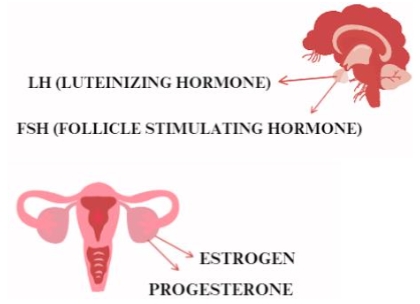
The menstrual cycle has attracted the interest of many researchers for many years. It is analyzed from many angles, including its impact on mental health. Hormonal changes over the course of the cycle have a very strong impact on the emotions, needs, or pain experienced. Estrogen, secreted shortly before ovulation, influences increased confidence and feelings of attractiveness, which can lead to new relationships. In contrast, progesterone, secreted during the luteal phase, promotes the strengthening of stable relationships, and a large proportion of women may experience premenstrual syndrome (PMS) during this time. This publication discusses studies from recent years that have assessed the variability of women’s needs and emerging symptoms during different phases of the cycle. It also summarizes any strategies and practical tips needed to work with women considering their cyclical variability.
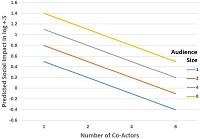
This experiment examined the influences of number of co-actors and audience size on manual dexterity task performance and subjective reactions such as perceived effort and arousal. Predictions derived from social impact theory and the self-attention perspective’s other-total ratio indicated that both number of co-actors and audience size should influence responses. Undergraduate students (N = 128) responded as 1, 2, 4, or 8 group members who were observed in counterbalanced fashion by 1, 2, 4, or 8 audience members for four performance trials. The predictions of increased task performance with larger audience sizes and decreased performance as number of co-actors increased were not supported. Participants’ rated arousal was somewhat consistent with the predictions from the self-attention perspective and social impact theory. Self-reported effort was consistent with the predicted patterns, but not always significantly so. The influence of number of others is moderated by the objective-subjective nature of responses of real co-actors performing in front of live audiences.
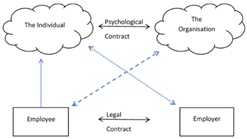
The level of research undertaken on the academic psychological contract, and its influence on academics’ behaviour is limited. This paper seeks to consider the academic psychological contract, by reviewing its manifestation within the role and the influence on their undertaking of the role. Particularly important is academics’ interpretation of the role and what they consider important. Within this, the paper considers in-role and extra-role activities and what may be the grey areas in which time is spent. The research adopts the combined usage of phenomenology with interpretivist processes to investigate the insights of eighteen academics at nine UK University Business Schools. Semi-structured interviews were used to collect data to consider the constructs’ manifestation. Key aspects of behaviour were identified as discretionary effort autonomy and managerialism, with links to academic citizenship.



 Open Access