


 Open Access
Editor-in-Chief

eISSN
3029-2956
Publication Frequency
Quarterly
Indexing
Polish Scientific Bibliography
All the publications will be archived by the PKP Preservation Network for long-term electronic preservation.
Authors are encouraged to self-archive the final version of their published articles into institutional repositories (such as those listed in the Directory of Open Access Repositories).
Authors are also encouraged to use the final PDF version published on the website of Academic Publishing.
J-Gate
Open Access Library
About the Publisher
Academic Publishing insists on taking academic exchange and publication as the main line, carrying out comprehensive management based on science and technology, and fully exploring excellent international publishing resources. Within 5 years, it will form a strategic framework and scale with science (S), technology (T), medicine (M), education (E), and humanities and arts (H) as the main publishing fields. Academic Publishing is headquartered in Singapore and based in Malaysia, with the United States and China providing the main scientific and academic resources. At the same time, it has established long-term good cooperative relations with other publishing companies, scientific research communities, and academic organizations in more than a dozen countries and regions. Academic Publishing uses English and Chinese as its main publishing languages, mainly publishing books, journals, and conference papers in print and online. The vast majority of publications follow the international open access policy, providing stable and long-term quality and professional publications. With the joint efforts of the expert team and our professional editorial team, our publications will gradually be indexed by international databases in stages to provide convenient and professional retrieval for various scholars. At the same time, manuscripts we accept will be subject to the peer review principle, and cutting-edge and innovative research articles will be preferentially accepted for peer reference and discussion. All kinds of our publications are welcome for peer to contribute, access, and download.
Volume Arrangement
2023
Featured Articles
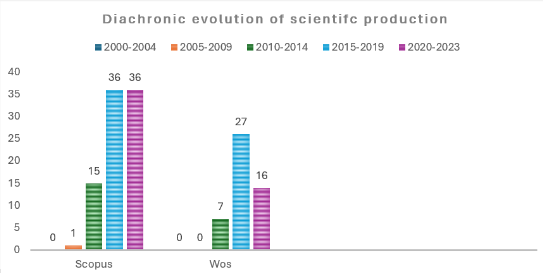
Diachronic analysis of Spanish scientific production on teaching methodologies in Primary Education: A scientometric and conceptual perspective (2000–2023)
The evaluation of science is essential to ensuring the quality, validity, and reliability of scientific results. Science needs to undergo a review process to ensure the rigorousness of scientific output. This evaluation provides a solid basis for political and economic decisions related to the design and execution of research projects, the establishment of new lines of research, or the identification of areas of specialization. This paper analyses diachronically the Spanish scientific production related to the implementation and development of teaching methodologies in primary education and indexed in the Scopus and Web of Science databases during the period 2000–2023. This analysis is carried out on the one hand, from a scientometric perspective, based on the analysis of indicators such as diachronic production, the journals with the highest scientific productivity, and the most productive institutions, and, on the other hand, from a conceptual perspective, trying to define its relationship with other areas of education. The general results of this study reveal two clear stages: the first, up to 2010, with little scientific production; and the second, from 2011 onwards, characterised by a general growth. The relationship between this field and others such as initial teacher training, ICT, and didactics is also evident.

The relationship between teachers’ self-efficacy and classroom management practices in secondary schools
This study explores the intricate relationship between teacher self-efficacy and classroom management practices in secondary schools in the Mansehra district of Pakistan. Teacher self-efficacy, defined as the belief in one’s ability to manage and influence classroom environments effectively, has been identified as a critical factor influencing both teaching performance and student outcomes. The research employed a mixed-method approach, gathering data from 62 teachers and 310 students using both online surveys (via Google Forms) and physical questionnaires to ensure a diverse and inclusive participant pool. Data analysis was conducted using two complementary tools: SPSS and Smart PLS. SPSS was used for descriptive statistics and inferential analyses, such as t-tests, chi-square tests, and measures of central tendency, to offer an overview of group differences and relationships between variables. Meanwhile, Smart PLS was employed for Partial Least Squares Structural Equation Modeling (PLS-SEM), a technique suited for complex models and smaller sample sizes. This method allowed for the analysis of both direct and indirect relationships between the study variables—teacher self-efficacy, teaching practices, and classroom management. The findings reveal a significant positive correlation between teacher self-efficacy and classroom management practices. Additionally, teaching practices were found to mediate this relationship, indicating that higher levels of self-efficacy not only directly improve classroom management but also enhance teaching performance, which in turn contributes to better-managed classrooms. These results suggest that interventions aimed at enhancing teacher self-efficacy can have far-reaching effects on educational outcomes. The study highlights the need for focused teacher development programs that foster self-efficacy, thereby improving classroom management, student engagement, and overall academic success.
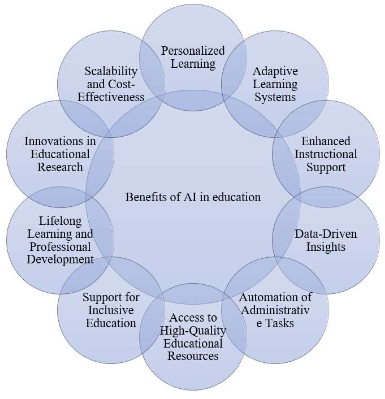
This comprehensive study delves into the multifaceted role of AI in education, exploring its applications, benefits, challenges, and future implications. The purpose of the study is to show how AI in education helps educators identify gaps in student knowledge and provide targeted feedback to improve learning outcomes. As a methodology, the library method and the study and review of various documents have been used in this research. The study examines the diverse range of AI technologies employed in educational settings, including intelligent tutoring systems, personalized learning platforms, educational chatbots, and virtual reality simulations. Furthermore, the study delves into the numerous benefits that AI brings to education. It highlights how AI-powered analytics and data-driven insights enable educators to gain deeper insights into student learning patterns, identify areas for improvement, and tailor instructional strategies accordingly. Additionally, AI-driven tools promote inclusivity by providing personalized support to learners with diverse needs and learning styles. Despite its transformative potential, the study also acknowledges the challenges and ethical considerations associated with integrating AI into education. Data privacy, algorithmic bias, and the digital divide are examined in detail, emphasizing the importance of responsible AI deployment and ethical guidelines. Looking ahead, the study explores the future implications of AI in education and the evolving role of educators in AI-enabled classrooms. It discusses how AI technologies will continue to evolve, offering new opportunities for collaborative learning, skill development, and lifelong education. In conclusion, this comprehensive study underscores the profound impact of AI on education and the need for thoughtful implementation strategies that prioritize equity, inclusivity, and ethical considerations. By harnessing the potential of AI, education systems can better prepare learners for the challenges and opportunities of the future.
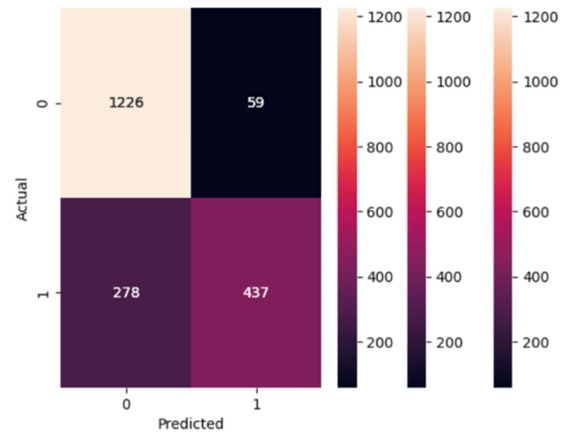
Enhancing adult learner success in higher education through decision tree models: A machine learning approach
This article explores the use of machine learning, specifically Classification and Regression Trees (CART), to address the unique challenges faced by adult learners in higher education. These learners confront socio-cultural, economic, and institutional hurdles, such as stereotypes, financial constraints, and systemic inefficiencies. The study utilizes decision tree models to evaluate their effectiveness in predicting graduation outcomes, which helps in formulating tailored educational strategies. The research analyzed a comprehensive dataset spanning the academic years 2013–2014 to 2021–2022, evaluating the predictive accuracy of CART models using precision, recall, and F1 score. Findings indicate that attendance, age, and Pell Grant eligibility are key predictors of academic success, demonstrating the strong capability of the model across various educational metrics. This highlights the potential of machine learning (ML) to improve data-driven decision-making in educational settings. The results affirm the effectiveness of Decision Tree (DT) models in meeting the educational needs of adult learners and underscore the need for institutions to adapt their strategies to provide more inclusive and supportive environments. This study advocates for a shift towards nuanced, data-driven approaches in higher education, emphasizing the development of strategies that address the distinct challenges of adult learners, aiming to enhance inclusivity and support within the sector.